
Christian living- dealing with one 'oops' at a time…

Image

Today (9/13/13 beginning at sunset) the Jewish people, and many Messianic Jews, celebrate Yom Kippur, the Day of Atonement. Like most Jewish feasts the traditions of today are not the same as they were in Biblical times due to the absence of the Temple, but there is rich meaning in the events that were to occur on this day.

The Day of Atonement is the only ‘sad’ feast, and the only one that requires a 24 hour (from sunset to sunset) fast. Why is this feast different from the others? Because this is a day of repentance for all of Israel, and there are sacrifices prescribed for the priests, the leaders and the people. No one is without sin, and those who hold a position of respect are required to do more to repent.

This is the day when the high priest, who has washed and remained awake all night so that he may not sin accidentally, goes behind the curtain of the Temple and sprinkles the blood of bulls and goats (guilt offerings for the priests and people) behind the veil in the Holy of Holies, and it is hoped that God would give him a message for the people. In the year that Jesus was crucified, God did just that, and the message that Caiaphas received was that it was better for one man to die for all the people. (John 11:50-51) (He, of course, misunderstood what was being said exactly, but that is another story…)

On the Day of Atonement two goats are brought to the Temple. Lots are drawn and one goat is sacrificed while the other becomes the scapegoat. A bull is also sacrificed for the sins of the priests. These sacrifices are unique because although the blood of the animals is sprinkled seven times on the altar, as well as in the Temple, the entire animal is burned outside the camp, rather than on the altar itself. This imagery fits with Jesus, who is our lasting atonement, being sacrificed outside of Jerusalem as well.

The other goat, known as the scapegoat, has a red ribbon tied to its horns. The Talmud reports that a portion of the ribbon was then cut off and placed on the Temple gate. By morning it would turn white indicating that God had accepted their sacrifices. (After Jesus’ death the ribbon ceased turning white.) The scapegoat is then taken outside the camp and let go to signify that the people of Israel wish to have their sins taken as far away from them as possible. Since the goat occasionally wandered back into the city, it became customary to drive it off a cliff to prevent its return. But Biblically, it is to go free.

Now the Day of Atonement only removed one’s debts to God. Fixing relationships with others continues to this day to be something that requires getting up from the altar and going to another for forgiveness. This is why, when we come to Christ and our sins are forgiven, we may go to heaven (since our relationship with God is fully restored) but there are still consequences and relationships that need to be rebuilt here on earth. The sacrificial system at the Temple, and Jesus’ sacrifice on the cross, which replaced it, are for repairing a relationship with our Creator. Our debts to others require paying the debt, or asking for forgiveness from others. And God believes fixing relationships with others is so important that He tells us to leave our gifts (offerings) at the altar and deal with the people we have hurt before doing anything extra for Him. (Matthew 5:24)

Today the Day of Atonement is a day of reflection and asking forgiveness. Since there is no Temple, and since Jesus’ sacrifice makes the need for additional sacrifices obsolete, the blood of bulls and goats is no longer necessary. Examining your relationship with God and others however is always a good idea, so if you wish, put aside time on this day, and fast from sunset to sunset, and allow God to show you how you need to change.

Scapegoat references: http://www.calvaryoxnard.org/studies/nt/Mark/The%20Torn%20Veil.htm

http://www3.telus.net/public/kstam/en/temple/details/evidence.htm

I Remember… 9/11

Image

I remember 9/11. My husband called to say something had happened and we should turn on the news. We connected an outside antennae to the television and friends joined us to watch. The children were scared and we assured them that even if somehow some force were to take our cities, no one was going to take our hill- there were too many guns, and too few people who knew the woods like the backs of their hands. We calmed them with word pictures describing unknown others trying to find hunters whose presence in the woods was never noticed until they wanted it to be, while watching in somber disbelief as more and more reports came in.

The churches called people together to pray, and we gathered.

When reports of flight 93 came in we were proud, because this is America, and when the threat was known, the passengers behaved like Americans, using what little they had to save countless lives, and almost saving their own.

When we were called to war, many in our small town signed up to go, because we are America and we believed in our country.

When my son in boot camp was asked where he learned to jump and kick, he replied ‘his mother,’ because in our America unexpected people have unexpected skills and we share them with others.

When the drill instructor tried to tear my son down by making fun of his mother, he did not know that the mother did not resemble the son, because in America when a child needs a mother many answer the call regardless of what the child looks like or has been through. Because while there is still a long way to go, we are learning and overcoming and trying to be everything a person should be, because this is America.

While in countries torn by war our soldiers came back with pictures of cute kids and dogs, because even though they were fighting an enemy, they understood that not everyone and everything in a foreign land is evil, and they showed love to both when they were able, because they are Americans and this is how they were taught.

When the soldiers came back they were welcomed, because we learned from our mistakes and would not do what had been done in the past, because this is America.

When our country was again attacked, and our embassy fell, we demanded answers and remembered the victims, because this is America and our people do not die without reason, without answers.

This is still America. Twelve years later millions of bikers are riding to remember those we lost. Millions of people are setting aside time for prayer and remembering. Millions of people, many of whom knew no one personally, are still deeply affected by the events of years ago, because we are Americans. We are people who care, and we are a people committed to God and country. We are the people who run into danger to get someone else out.

So, while the media and those in power may wish to believe that what a young girl does to embarrass herself on TV means more to us than what a leader does to affect our lives we know that the America we know still exists, is still strong and is ready to be heard.

America, the land of the brave, the land where people fight terrorists on planes with coffee pots when needed….

America, the home of the free, the land where our children sign up to fight because we still have a country they wish to believe in…

America, the country who remembers her roots, her principles and her constitution even when those who rule seem to forget, we are the people who stand up and force them to remember…

Continue to pray for our country today. Pray that God strengthens us where we are weak so that we might change, gives us wisdom so that we might know the better ways to go, and the courage to stand up to those who would lead us astray. And then thank God that we are still a nation where the people, we the people, help when crisis hits and remind us that we still have the power over the few who would like to be king.

Image

In Jonah 3 we see an excellent example of how to repent and escape an almost certain judgment.

Nineveh was a city known for its cruelty. No matter what you have done in your life, you have likely not done as much as these people had. Killing brutally was a way of life, and Jonah had a reason to be scared.

And God sent an imperfect prophet, one who had run from the assignment, and one who had been recently spit from a fish onto their shores. He was likely not as clean as one would like (there is no mention of his baggage being spit out too), and if questioned he would likely reveal his weaknesses as a leader. There was every reason for the people not to listen to this man, yet they did.

And the king listened as well. He arose from his throne (took action). He humbled himself (laid aside his royal robes). He put on sackcloth and sat in ashes (performed deeds that at that time showed he was sorry). Then he issued a proclamation (He explained to the people under his authority why it was good to do what they were already doing. He encouraged them in their repentance.)

The question is: Do we repent in this manner?

Or do we instead:

-Make excuses as to why the person bringing this to our attention is not worthy to be listened to. Or worse, begin to criticize and harass them publically to all who will listen.

-Refuse to change and find excuses to believe we are fine the way we are.

– Refuse to humble ourselves because of our position, or because we do not want to look weak. Other people may apologize, but what would it look like if the pastor, elder, parent etc did so.

– Refuse to do things that demonstrate our repentance. We may say we are sorry, but often we forget that actions speak louder than words. When there are no acts of repentance (doing nice things for the person you hurt etc), it is often hard to believe that someone is truly sorry. Words are easy, it is your actions that tell who you truly are.

– Neglect to encourage the people under our authority to follow our example. Leaders are examples to those under them whether they do what is good, or what is bad. For this reason it is important to allow those under you to see you are repentant, to know that you are acknowledging that what was done was wrong even if it was done by the leadership and to explain your motivation for repentance. A leader who fails to do this will often have followers (or children) who begin to repent, but then return to evil because they do not see why it is truly important to change, since their leadership does not seem to be getting on board.

Repentance is hard, especially when one is in leadership (even if that leadership is just parental). But, if you do not wish for those under you to follow in your bad example, you must show them, and explain to them, what repentance is and why it is important to do it when we realize we have messed up.

Image

Let’s pretend that Common Core won’t cause teachers to pretend that students who do not learn the skills assigned to that grade are actually proficient. Nor will it cause students who are able to go ahead, to be held back, because those skills are not a part of the core curriculum for their year.

No Child Left Behind led to a rash of teacher cheating, and good grades being given to those who did not deserve them. I know because my children were part of this failed experiment. They also learned strategies to test taking and essay writing that allowed them to demonstrate knowledge without actually having any.

Did you know that if you pick out the biggest word in a question, then find that word in a paragraph and write the sentence you found the word in down you will most likely get the question right?

Did you know that the trick to writing a good summary is to pick the longest sentence in each paragraph, write them down and then change a few words here and there to make it your own work?

Did you know that you can get up to 75% in math by writing the numbers given in the problem as an addition, subtraction, multiplication and division problem in the space provided even if none of your answers are right because somewhere on the paper you demonstrated the right process for solving the problem? (3 points for showing your work/ one point for the right answer. The students who do the math in their heads but get all the right answers receive a 25%…)

Did you also know that a child who does not know all of her letter sounds, and is still counting beans in math at the end of the third grade, in a regular classroom, can receive straight As on her report card because her emotional handicap somehow means she needs to see those grades in order to achieve? (She was pulled out of a regular classroom twice a day for thirty minutes for math and reading taught in a 15:1 setting… And this is what the social worker called being ‘grade level’ and ‘doing fine in school.’)

Instead of standardizing education (because we know that every kid fits the standard) why don’t we encourage teachers to find what works for their students and let the parents be the judge of whether, or not, the child is getting what they need. School choice and more parental involvement is a better option than any one-size-fits-all program (even to the point of the local parents being able to get rid of teachers who do not meet their children’s needs- after all, the parents do pay the teachers’ salaries in the form of taxes…).

I took my children (who were adopted when they were older) out of this system and home schooled them. All of my special ed kids graduated high school. One served in the Marines, and now works in Kuwait. Another is in hotel management and is a high school soccer coach, and the third, who was to live in a group home for the rest of her life, is now a mother of two who works part time at a hotel. If I can do this without a teaching degree, just think of what our schools could do if we pushed them to try!

Let’s stop pretending and make real changes that really work. Implementing programs that are sure to fail and paying more into a system that has not produced results is just plain nuts.

A Tale of Two Moms

Image

The other day I was talking with two mothers. We were all home schooling, and both mothers were new to it. As I recounted my life and experiences I noticed that each mother was reacting differently to everything I said. At the end of the conversation one mother exclaimed, ‘I know who I’m coming to with any questions!’ The other shrank away from my presence.

I’ve seen this reaction before. Moms who are not secure in what they are doing, and who dislike hearing that anyone is in a better place then they are. The irony is that years ago I was in the same place they were, and their results are likely to be just as good as mine are! I am just a little further down the road, and a lot more comfortable with what I am doing, because I have been there, done that, and seen the fruit of some of my work blossom into blessings for the children I taught- and they have not had that experience yet.

The problem is that we are trained, for the most part, by society to see life as a competition, and with that perspective we have trouble asking for help, or even utilizing the people God puts into our lives who are good for instructing others. The older cannot teach the younger if the younger are threatened and offended by the offer.

The woman who loved hearing that I had all of this experience is rare. And the irony is that I would love to help in any way I can, and now that mine are grown, and leaving the house at a rapid rate, I have the time (and energy- no more midnight feedings etc) to do so. I love this stage of my life, but it will all go to waste if the younger generation continues to belittle each other and make each other fear looking weak, or less than in comparison- especially when that comparison is the equivalent of comparing apples (an older mom) to oranges (someone still fresh and cheeky and ready to take on the world). And the irony is, in general, women love to talk, and especially reminisce about their children’s younger years!

I am the mom I am today thanks to a remarkable generation of older women. I went to their houses as a home care physical therapist, and gained mountains of insight and advice as we engaged in small talk about my children. Did I do everything they recommended? No. But I did learn a lot, and it is time for my generation to return the favor. Young moms, ask yourselves: Who you are allowing into your life to provide wisdom and insight that will make your life easier and more enjoyable in the end? (Pick some good ones!)

So What Is Rosh Hashana?

Image

   Rosh Hashana is commonly known as the Jewish New Year. Before coming out of Egypt the Jewish people, like those around them, began their calendar year in the fall. God instructs Moses to change this practice, and the Jewish year changes to begin in the spring, just before Passover. But, like many of us commonly do, the Jewish people compromise with God, and begin using two calendars, a religious calendar, which began in the spring and a civil calendar, which began in the fall. Later kings were officially put into office at the beginning of the civil new year, in the fall, which explains why some kings seem to be king, and then are being put into office a wee bit later in the Bible. (Though there are sometimes other reasons for this as well, such as a region, but not the whole nation, accepting the person as king up until this point.)

Rosh Hashana falls on the same day as the Feast of Trumpets. During the Feast of Trumpets the shofar  (a ram’s horn) is blown throughout the day. It is a day of assembly (where the Jewish people come together for food and fellowship) when no work is to be done (a day off). (Num. 29:1)

The Feast of Trumpets is a unique holiday since it is the only one that occurs at the beginning of the month. Since the Jewish month began with the first confirmed sighting of the sliver of the moon, this is the only holiday that leaves people guessing which day it will actually occur on. For this reason many believe it to be the foreshadowing of the rapture.

The Jewish people also believe that, on this holiday, a person’s name is placed into one of three categories. He (or she) is either written into the Book of Life for the upcoming year, is exempt from the book of life, or finds themselves in an in between state. Those who are ‘on the fence’ so to speak, have ten days, until the Day of Atonement, to repent and get their name added to the Book of Life. For this reason Rosh Hashana is a day to reflect and examine your past deeds and motivations, and if necessary, repent wholeheartedly. (Remember: This is not Biblical, but instead belief that has arisen surrounding this holiday.)

Many traditions have also arisen to help celebrate this holiday. One is to visit a stream, or river and empty your pocket lint into it, indicating that you wish to start the new year ‘clean.’ Small children will fill their pockets with pebbles along the way, and they will skip or throw them into the stream for entertainment.

Another tradition is the eating of apples with honey, signifying a wish to have a sweet new year.

Many Biblical events are also said to have happened on this day. They include:

-The first day of creation

-The (almost) sacrifice of Isaac by Abraham

-The giving of the Law from God to Moses at Mount Sinai

-The day the daily offerings resumed at the Temple during the time of Ezra

-The day the heads of the households gathered to study the Torah in Nehemiah

So how is a Christian to celebrate this holiday?

Any way you want to! (with reverence, of course)

Most Christians do not celebrate the Jewish holidays at all, since they were unique to the country of Israel, and cannot be celebrated as the Bible ordains without a working Temple. (This is why the Jewish people today celebrate Rosh Hashana and not the Feast of Trumpets on this day. They are technically not the same.)

Some Christians do celebrate the Jewish holidays, and there are many web pages (both Jewish, Messianic and Christian) filled with ideas about how to incorporate teachings about this holiday into your life.

Here are some things to remember:

Each holiday begins at sundown. Why? Because during the creation account in Genesis a day is described as being from evening to morning, so the Jewish people begin their days at sundown. (Meaning that any day of fasting ends at sundown and does not involve you going to bed starving!)

Like most holidays Rosh Hashana includes food and fellowship. Apples and honey are the traditional foods for this holiday, but there are many other tasty recipes you may wish to try as well.

Setting aside a time to reflect on your behavior, and what motivates that behavior is also an important part of this holiday. Pray to God and ask Him to show you where you could improve this year. You may wish to write down what you wish to change in a journal, and read it next year, or burn it as an indication that you are done with this type of behavior. If the behavior is significant, this may be the time to discuss it with people close to you and ask them to hold you accountable when you fall into patterns of behavior you wish to change. Pray for God to give you the wisdom and the strength to make these necessary changes as well.

You may also wish to take a walk to a stream and empty your pockets of lint as a reminder that, as of today, you wish to make a fresh start. A picnic by the stream, with the children skipping rocks in the stiller areas may also be enjoyable.

But whatever you do, do it as unto the Lord. This is a time to reflect and remember that God forgives us when we repent.

I hope this helps you to understand this wonderful holiday!

Shalom! (Peace),

Judy Barrett

Image

FB rumor has McDonald’s in NYC considering raising their minimum wage to $15/hour and the young adults on my FB feed are excited and are posting about how they should move there. Bad idea. Why? NYC is an expensive place to live and, the truth about wealth is that it is not about how much you make, but about how much you can buy with it. Let me explain.

If you make $500/week and an apartment rents for $300/ month in your area you are doing okay. But, if you make $500/week and an apartment in your area rents for $1,000/month you have a lot less money for extras, and chances are the ‘extras’ in your area cost more too. So in one part of the country $500/week is a living wage, while in another part you may need a second job to make ends meet. This is the problem with living in NYC versus upstate NY; everything costs more in NYC.

Now let’s look at raising minimum wage in general. Here’s what typically happens:

1. Minimum wage goes up.

2. The price of everything you buy goes up as businesses need to make more money to pay their employees. People are often laid off as well to cut expenses.

3. Taxes on goods increase, since sale tax is a percentage of what you pay for an item.

The result:

1. Less people have jobs and the things you buy now cost more.

2. The people who were making slightly more than minimum wage typically do not get raises, so they are busted down to living a minimum wage lifestyle again.

How to tell how much you truly make:

Bread is a great indicator of wealth, since it represents how much it takes to feed your family. If you make $7/hour and bread in your area costs $3.50/loaf then you make 2 loaves/hour. If minimum wage increases to $10/hour, but the price of bread goes up to $7/loaf you can no longer buy two loaves of bread for an hours worth of work, so even though you have more money in your pocket, it is worth less and you are poorer. This is typically what happens when minimum wage is raised, and the poor now have to work harder for less spending power even though they technically make more than they did before.

So how do we actually help the poor?

1. Encourage job growth. More jobs means more demand for employees. Employers will therefore be motivated to pay higher salaries to get the workers they need. In areas where there are a lot of workers and few jobs wages tend to be low and working conditions less desirable.

2. Educate people from a young age about the importance of a good work ethic. Employers will pay more to keep a good worker. Further, when your place of employment is known for its quality more people buy there and they will often pay more money for the service. More money for the company means there is more money for employees’ salaries and benefits, and since every company wants to keep their good reputation, being the best means they will pay more to retain your services as well. Doing things well pays off in the end.

3. Mentoring. Encourage job shadowing early in high school and mentoring later, even through the adult years. People need to be in contact with people who have ‘made it’ to where they want to be in the world. Why? Because there are skills and habits successful people have that some people need to learn in order to succeed. They will not learn business manners unless they are exposed to them. We can all think of someone who did something really inappropriate on the job (and was subsequently fired.). The sad fact is that they probably did it out of ignorance. Mentoring also lessens the feeling of ‘why bother/ it’s impossible/ I’ll never make it’ by showing the person that there is a real person (flaws and all) who did what they want to do, and who can show them how to do it too. Many people do not want to bother others, or do not feel they are good enough to be a more successful person’s friend, so the mentor needs to be pro-active in continuing the relationship.

4. Aggressively counter the victim mentality whenever possible. My adopted son tried pulling the race card once (and only once). He had not been discriminated against (half of the police force here looks like him…), but he did not want to accept that he got what he deserved because of his own actions. Whenever possible the principle of cause and effect needs to be clearly defined so that whatever ‘stinkin’ thinkin’ exists that causes people to feel that it is not worth trying is eliminated, or at least minimized. Any real discrimination needs to be dealt with as well, harshly so others will not do the same. Being made to feel like you cannot succeed (learned helplessness) is a serious crime. (Ironically, my son-in-law (white) grew up in a situation where he felt it was useless to finish high school. My daughter (dark skinned) passed his level of education despite multiple issues that affected her ability to learn. Expectations matter.)

5. Do everything you can to discourage single motherhood. Single motherhood is a big factor in children not doing well. Fathers, even if they do not marry mom, need to be encouraged to be productive, helpful, ever-present parts of their children’s lives. If there are single mothers, support is needed. Not hand-outs, but help. Families who come up beside the mother and help her learn how to handle the terrible twos, or the sulky teen will do much to improve the child’s future. But you must come up along side the mom. Trying to replace mom and subtly implying that their mother is less-than typically undermines her authority and makes the situation worse long-term. Mom is the authority figure in this situation and, unless she is completely neglectful (in which case social services may be needed) she is the one who must ultimately be in charge of the child.

6. Encourage small business start-ups. Many poor people have skills, and do not realize that they do not need an employer to profit from them. (Heck, my cleaning lady runs two crews of young girls and probably makes more than I do!) House cleaning, yard work, repair jobs etc can result in large profits and the eventual employment of others when organized well. Paintings, jewelry and other items can also be sold on-line, so even though there are not buyers who appreciate or have extra money for these things in your community, you can reach those who are interested anywhere in the world.

Things that hurt the poor (that we think help):

1. College. College is great- if you have a career goal and know what to do with your degree when you are through. College just for the sake of going loads young adults down with debt and does not result in a job. Without a clear knowledge of where to apply with said degree and how to interview well enough to be wanted in that field many twenty-somethings return home with large loans and no way to pay them off. Some degrees require a masters, MBA or PhD to be marketable. It is good to know this before you start down that path. Others require great inter-personal skills. Introverts may not find they are a good fit if they did not understand what the job really entailed, and may not get hired because the employer was looking for a ‘people-person.’ Again, college is great if you are obtaining a skill you need to achieve your goal. College is wasted if you choose something you are ill-suited to do, or if you do not complete all the education typically required in your field. Guidance is needed for children of all socio-economic levels so they understand this point.

2. Government programs. Do you know how many times I have been working with someone who is starting to succeed and then they quit because they now qualify for a ‘program?’ Programs without mentoring are useless. Money is needed when you are poor, but so is education. Local help works so much better than a check. One of my favorite charities pays the participants for learning in credits that can be used in their store. The classes involve homework to be done before class, a video, then a session with a volunteer where the video is discussed. Most of the classes are on life-skills such as parenting, and it works. The participants improve their situation, develop relationships with the volunteers so they have someone to ask questions of when life gets tough and they have access to clothing and other everyday items they need for their family.

3. Subsidized housing. It is not the subsidy that is the problem, but the fact that it tends to put the poor in one place. Poor people need access to people who have succeeded, or they will not likely learn how to succeed. There are many ways to de-segregate the poor (and it should not be forced, or there will be resentment). Churches are a great place for people to inter-mingle, as are sports and other community activities. For self-destructive behavior not to be reinforced there must be access to role models who live differently. Placing the poor in one area does minimize crime in other areas, but exponentially increases its likelihood in the places where life is seen as ‘futile’ and trying hard is ‘useless.’

We need to be pro-active when it comes to the poverty problem.

Schools in poor neighborhoods would do well to invite professionals who came out of the neighborhood to speak to the children often so they know it can be done. (And these people know how the children think so they will be more effective in reaching them than you or I would.)

Less traditional teaching methods and out-of-the box thinking must be used to encourage the children to achieve. Anything that is not working must be replaced. Children from environments that do not emphasize the need for school require different approaches than schools that are full of children whose parents reinforce the need to do well. Home school resources have addressed every type of learning style (and then some) in order to make learning fun and effective. Let’s allow the teachers access to what is already available as well. Let’s also allow volunteers from the surrounding communities to help. One-on-one attention for a struggling student is priceless.

Schools also need to keep the teachers excited and motivated. Burned out teachers do not teach well, and children who are not sure why they are even in school are tough to work with. Teacher rotation, encouragement and training by teachers who have been successful with children like theirs may be necessary. (Listening to Mrs. So and So who taught at the prestigious private school may not result in knowledge that applies to this population of children.) (School choice may also help with this.)

Another idea is to capitalize on what the students do know. In our area many of the less-successful-in-school children know two languages poorly. We need translators, and they have a head start having spoken both languages from birth. Offering classes that clean up their grammar and spelling and lead to a job translating in the courts, hospitals, tourist areas or even the UN would be helpful. (I was astonished that, in a largely Hispanic area, the federal court translators we saw on a field trip were not Hispanic. This is likely because, while we have many, many bilingual citizens there were likely not many that could pass the required test.) In other areas children grow up loving cars (mechanic, engineer, design classes), art (typically graffiti) could lead to graphic design courses etc. We need to get creative and real before these children’s talents are lost and they do not know what to do with their lives.

These are all just ideas. It is up to you to decide what will work in your community and make it happen.

Image

As you know, if you have been reading my posts, we adopted three children who were already in school, but definitely not learning. We decided, after trying public, private and supplemental tutoring that home schooling worked the best for us. Why? Because individual attention, when a student is behind, trumps any other form of education. The student needs to back up and learn at their own pace, which is sometimes painfully slow.

Thanks to ‘no child left behind’ my third grade daughter, who did not know her letter sounds and was still counting beans in math, received straight As. (No kidding.) When I asked why, the teacher patted her on the head and told me that children like her (with emotional issues) needed to see those grades for their own self-esteem. Those grades did not help her ‘self-esteem.’ Even though she was doing poorly in school, she was smart enough to know her report card was a joke. Any incentive grades could have made in her learning was now gone. (And she was competitive with her brothers who received ‘real’ grades on their report cards.)

Any national standard will leave children like mine behind. The teacher will need to keep the children on pace with the curriculum and it will be a disincentive to slow down when the children are struggling, and at times whole classes struggle. A friend of mine called me frustrated because he had a class of third graders that did not have their sight-words (the, did, for, run- things you should be able to spell automatically without sounding out) memorized yet. He had to go back and teach the basics before they moved on. This meant that this class would not finish where previous classes had, but they needed the basics. To try to stay on track would have resulted in them being even further behind.

Where we live today the high school students can pass a class titled ‘Algebra,’ but since the math teacher needs to catch them up they may not learn as much as the children who were surrounded by students more motivated to learn. The problem is the children, and their parents think they learned, and succeeded in Algebra. When the child gets to college and fails in math, they will not understand why, and likely be frustrated enough to quit. Common standards will only result in more of this, not less, as schools will have to look like they are following the standard. It is better for a child to succeed at a lower level, knowing that they know what they know then to believe they have achieved and have skills when they do not.

Further, every community has its own flavor and needs. America should be diverse. One community may wish to focus on farming, since that it what they do, while another is overjoyed there is a CAD lab in their school. Let’s let us be unique. One of America’s greatest assets is her diversity.  Let’s not put anything in place to stifle this.

Common Core stands to lessen the overall knowledge of our country since everyone will have studied similar things. Someone should know Shakespeare well, while others studied Van Gogh. There should be a place where computer scientists thrive (like Silicon Valley) without the future farmers wondering why there is all of this programming stuff in their curriculum. (True farms benefit from some computing, but not the level the parents of Silicon Valley employees, or their children who have grown up thinking in C, would enjoy.) Having everyone learn a little of everything makes no one an expert in anything. Further there is bound to be some great stuff that is left out, or an agenda that begins to permeate our country that exists without critical evaluation because it was introduced at a young age and no one is taught to question it. (And everything should be questioned. I once took a course proving that Calculus exists. How many people have just taken it for granted that it does? We need a few people here and there that know why and how it works, rather than just doing it to get the answer right on the paper… but, as most successful adults can tell you, we do not need many of these people, because most of us who have taken Calculus have never used it again in our adult lives. The point: All knowledge is good, but not everyone needs the same knowledge.) Let us keep our diversity and find a different way to ensure than all children learn.

Photo by Matija Barrett

Image

One of the fallacies perpetuated in the church is that women are emotional while men are not. While, in truth, this statement does more to deprive men from healthy emotional expression, it is also commonly used to put down and undermine women in the church. So let us look at scripture, as it pertains to emotion:

1. Women cry, men do not.

Men in scripture cry, a lot. And for many, many reasons. Being reunited with estranged relatives (Jacob and Esau, Joseph and his brothers), for the death of loved ones (Jacob, Abraham), because people are speaking badly of him and life seems to be overwhelmingly (David), when their inheritance is lost (Esau), for the state of a nation (Jesus) and when they are in real danger or pain (Jesus, David). Weeping is not reserved for women, and there are more scriptural examples of men crying loudly about life’s injustices than we have of women doing the same.

Men Weeping In Scripture (usually loudly): Gen: 23:2, 27:38, 29:11, 33:4, 42:24, 45:2, Num. 14:1, Jdg 20:23, 1 Sam 20:41, 30:4, 2 Kings 8:11, Job 2:12, Is. 16:9, 33:7, 38:3, Jer. 9:1, Lam. 1:16, Hos. 12:4, Micah 1:8, Mal. 2:13, Mt. 26:75, Lk. 19:41, 22:62, Jn. 11:35, Acts 20:37, Rev. 5:4 (This is an abbreviated list.)

2. Women are easily deceived.

Although Eve was deceived, Adam sinned purposely and brought death into the world. Sinning on purpose is always worse than sinning because one was deceived, so it makes little sense that this is used as an argument for why men are more fit to lead. But deception in scripture is not limited to the female. Jacob, Isaac, Laban, multiple kings who believed Abraham or Isaac’s wife was their sister etc were also deceived. There are also lists for what to do when you realize you have sinned unintentionally. Being deceived is not limited to the female, nor are the majority of examples in scripture of people being deceived of women. Deception seems to be an equal opportunity problem. Perhaps this is why a man is to choose a wife who is wise and offers good counsel….

Examples of deception in the Bible: Paul Rom. 7:11, the church 2 Cor. 11:3, James 1:16, Eve 1 Tim. 2:14, Laban Gen. 31:20, Kings Gen 12:13, 26:7, Isaac Gen. 27:35

3. Women do not have the fortitude to lead.

There are many examples of women in scripture demonstrating leadership qualities and saving the day while the men were somewhat confused. Samson’s parents (Judges 13): The Lord speaks to Samson’s mother, not his father, first. When the Lord appears again, his wife takes him along to hear what He has to say. The husband then freaks out a bit, and his wife uses logic to reassure him that the Lord would not give them a prophecy then cause them to perish from being in his presence. There is also Deborah, who leads in battle when Barak is overwhelmed, the daughters who build the wall with Nehemiah while some elite men deem themselves to be too good for physical labor (Neh 3:12). Then there is the women who throws the millstone to save the city (Judges 9:53), as well as the one who has Sheba’s head over the wall (2 Sam. 20:22). The Queen of the South is also used as a witness to the wisdom of Solomon as a result of her testing (1 Kings 10:1, 2 Chron 9:1, Lk 11:31, Mt 12:42). Even Abraham was told by God to listen to his wife Sarah even though her wishes regarding Ishmael were in conflict with his (Gen. 21:12). (Sarah’s role as a parent becomes even more apparent when one realizes that Abraham had many sons, while Sarah had just the one. Gen 25:1-6) Women, good women, are typically portrayed in scripture as having wisdom, and making sound decisions that people respect and obey.

4. Women are nurturing, while men are less so.

God Himself uses feminine, nurturing adjectives to describe Himself. If Jesus Himself weeps and uses nurturing imagery to show Himself as a man who longs to gather His people to Himself, then a true man, walking in His footsteps should be able to do the same.

Paul too uses traditionally feminine imagery to describe himself and the others with him. (1 Thess 2:7 They were like nursing mothers.)

God as a nurturing mother: In labor Is. 42:14, Dt. 32:18, Suckling children Num 11:12, Is. 49: 14-15, comforts children Is 66:12-13, as a mother who births and protects Is. 46: 3-4, maternal Ps 131:2, Job 38:8, 29, Prov. 8:22-25, 1 Pet. 2:2-3, Acts 17:28, as a seamstress Neh 9:21, midwife Ps 22:9-10, 71:6, Is 66:9, as a mother bear robbed of her cubs Hos. 13:8, and a hen gathering her chicks Mt. 23:37

For more Biblical references to God exhibiting  traditionally feminine characteristics go to: http://clubs.calvin.edu/chimes/970418/o1041897.htm

5. A woman’s role is to teach other women and children.

There are more admonitions for men to teach their children than there are for women to do the same (though there are enough examples to prove that both are to instruct their offspring) and God states that on the new earth He will teach the children himself, indicating that teaching the children is the most important job there is (Is. 54:13). The Queen of Sheba tests a man, Solomon’s, wisdom, Priscilla co-teaches Apollo with her husband, Phoebe delivers the letter to the Romans and Julia is an apostle. The women are also the first to be charged with the message, ‘He is Risen.’ Women throughout scripture do more than work with children. They are a vital part of Jesus’ ministry, supporting the men financially (Lk 8:3). Women also run vineyards, work as shepherds, build cities, lead wars and make brave, quick decisions that lead to the defeat of the enemy (Judges 5:26). They also serve as leaders, prophets and have jobs at the Tent of Meeting (which seem to disappear after Eli’s sons rape them, not the women’s fault.) Women are more than capable of emotionally handling much more in life, and there are women in scripture for them to look up to as they do.

Further Jesus gathers the children to Himself, even though the disciples tell them to go away. Jesus, a single man, loves and is comfortable with kids. He also allows them to be present when He teaches (something not done during this time in history). Paul also has children he is close to who pray for him (Acts 21:5).

6. Men are stoic.

The psalms contain some of the best examples of worship and praise as well as examples of crying out loudly and emotionally to the Lord. And ironically, they were written by men, and many by a great warrior named David. He poured out his heart and soul in everything he wrote. Strong emotions resound, yet David is a man…

7. Women are better at relationships than men.

Many women do excel at relationships, but men in scripture are not lacking in this department. Isaac is caught caressing his wife in public, David and Jonathan are often used as an example of true friendship and the greatest love song ever written, The Song of Solomon, was written by a man. Men have relationship skills and, if allowed, may excel in this area as well.

8. Men are protective, while women are nurturing.

Except the Bible describes women as the protectors as well. It is the mama bear, robbed of her cubs who is fierce (Hosea 13:8) and God describing Himself as a mother who rescues you. (Is 46. 3-4) While men do feel a need to protect their young, it is not limited to the masculine.

Joke: A comedian once said, ‘Women traditionally have had no interest in auto-racing, but if you strapped a baby needing to be rescued to the pace car, no man in the world would be able catch up.’ Women too are protective.

9. Women are weak.

While men tend to possess more physical strength (though this differs on a case by case basis, and women tend to survive harsh conditions better so there is a trade off) the type of weakness attributed to women is often not a physical, but a psychological weakness. Again, referring to scripture, there seems to be more cases of men falling in the area of moral fortitude than women, especially when it comes to the female. Lust takes down more men in scripture than their female counterparts (though we do have Gomer…). It is therefore the male, not the female, who has much to learn in this area. But that is the point. We are to learn. We are to mature and overcome. Scripture is not about staying weak, but about becoming a mature, stable, capable human being. And this admonition to emotional maturity is not limited to the male.

So, men, as well as women, are to be fully emotionally equipped. But those emotions are to be handled maturely, and there are examples of mature men and women who showed both wisdom and self-control throughout scripture. To say that ‘women are emotional’ is to not address her need to mature out of petty things. To say that men are not emotional is to deprive a man of his right to express what he feels. Neither is good. Emotions, when handled appropriately, are a God-given gift that every member of the Trinity also possesses. To deny or belittle their place in the human experience is to be less than the image-bearer of God, and to deny that we are to love Him with all of our strength, mind, heart and soul. (Luke 10:27) Emotional maturity is therefore the goal for all Christians, male and female.

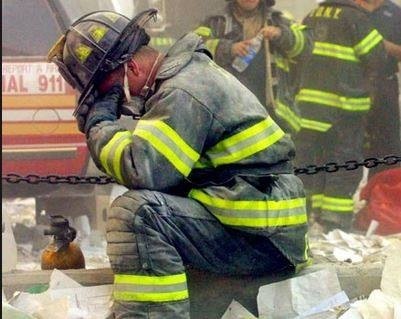
Photo by Matija Barrett

Photo by Matija Barrett

Perhaps it’s because I was a Navy brat and a geek, but somehow I missed the memo that there were things I was not to enjoy. So I went, and, like many people from centuries long ago, I laughed and loved the entertainment. Then I grew up, and listened to the excuses people gave not to go, not to try styles of music and fun that have stood the test of time, and in some cases the test of money. Then I met a man. Little did I know that he was not the enthusiast I was when he bought me season tickets to the symphony… but he married me and now he is stuck!

And he has realized something many people do not. Shakespeare and opera are low-brow entertainment. That’s right, low-brow. Much of what is done on stage is like Family Guy set to music or jazzed up in Old English (which was a lot more understandable back then). And the bigger irony, much of our popular entertainment consists of remakes of these classics! Pretty Woman is a modern remake of La Traviata (the opera he takes her to in the movie). The Lion King is Shakespeare’s Hamlet and She’s the Man is The Twelfth Night. There are many, many more, but you get the point. The stories are still entertaining, and the problems they deal with are still problems we can understand today.

So why don’t more people go? Besides the bad press there is a bit of a language barrier, true, but a good production solves that (and there are always subtitles at the opera). And if anything, the added level of difficulty serves to improve your reading comprehension. And the topics addressed make us talk- about how women are treated, even today (yes, men still classify some women as ‘hoes’ and treat them with disdain), about how dysfunctional family dynamics lead to tragedies, including death (typically through suicide and/or drug overdose), about how people have not changed much over the years, and about how we have. And many opera companies and theaters have family or student discounts, as they want to encourage a new generation to love, and support, what they do. So check one out. It may be more fun than you thought it would be, but just remember, like the movies of today, some are PG and some are well…. if your children understand you will be having a discussion on other life events as well today.

And as for classical music, there is so much of it, and in so much variety, that to say you don’t like any of it is to say you have never tried it. And since it has been hiding in the background of your favorite cartoons, TV shows and movies for years, (George Lucas hired the London Symphony to play the music to Star Wars…), you probably do enjoy many classical, and neo-classical (my term) pieces, you were just not aware of it. So enjoy, and broaden your horizons. Why? If for no other reason than to start a conversation- a conversation that is still necessary about how people are to be treated and about how stupid some of the things that we as a society still do. So while Family Guy does much to satirize and bring these topics to light, you look foolish trying to base an intellectual conversation off of something you saw on TV last night, while discussing the plight of the female, through the lens of Taming of the Shrew, or the injustices in politics through Julius Caesar, just sounds so much more credible. (And I am fairly sure Seth MacFarlane has studied both. Don’t be less educated than Seth…)

(Some important points: All the characters in Shakespeare’s plays were played by men, so a few, rare companies use male actors for any given part. (Imagining Juliet being played by a man does increase the hilarity!) And, in opera, eunuchs were called castrati and parts were written for them in a higher range. Women are often used for these parts since we no longer castrate young men to preserve their youthful voices, making it impossible for today’s males to hit the higher notes. And, by the way, a big pet peeve of mine, Romeo and Juliet is not a love story! Romeo is in love with Rosalind at the beginning of the play, and then sees Juliet and his affections quickly shift. Shakespeare is making fun of teen love, not telling us to emulate it…)